
Idaho Court Records After Jail Arrest
After a jail arrest in Idaho, the booking record and court record move on different tracks. The jail record is held by the county sheriff or local custody agency. The court record begins when charges, hearings, filings, or other case events are entered in the trial-court system. Booking charges can be amended, replaced, dismissed, or reduced after prosecutor review.
The Idaho iCourt portal is the statewide public case-search gateway for trial-court records after charges are filed.
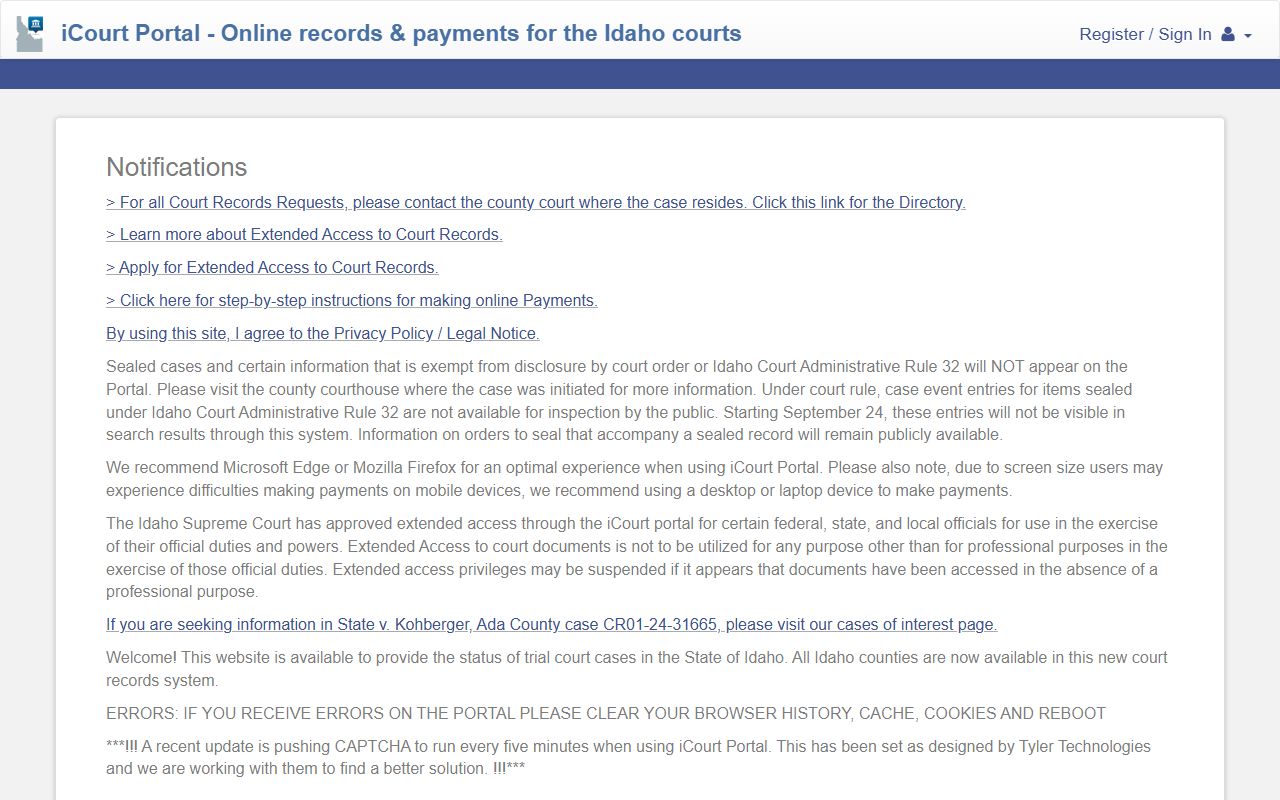
That portal is the court-record side of the lookup, while the jail roster remains the custody side.
Use inmate records for custody lookup and jail rosters and mugshots for booking-photo questions. Use court records for filed charges, hearings, case events, dispositions, and public case documents. That distinction keeps an Idaho court records after jail arrest search focused on the filed case, not just on the arresting officer's first booking entry.
How Idaho's Trial Court Records Are Organized
The Idaho Judicial Branch provides statewide public case access through the iCourt / Odyssey Portal. The Judicial Branch records page says general information on a court case is available through the iCourt Portal at mycourts.idaho.gov. For records from a specific court case, use a courthouse kiosk in an Idaho county courthouse or submit a request to the clerk's office where the case was filed.
The Idaho Judicial Branch court-records page explains iCourt access, courthouse kiosks, clerk requests, appellate records, and ICAR 32.
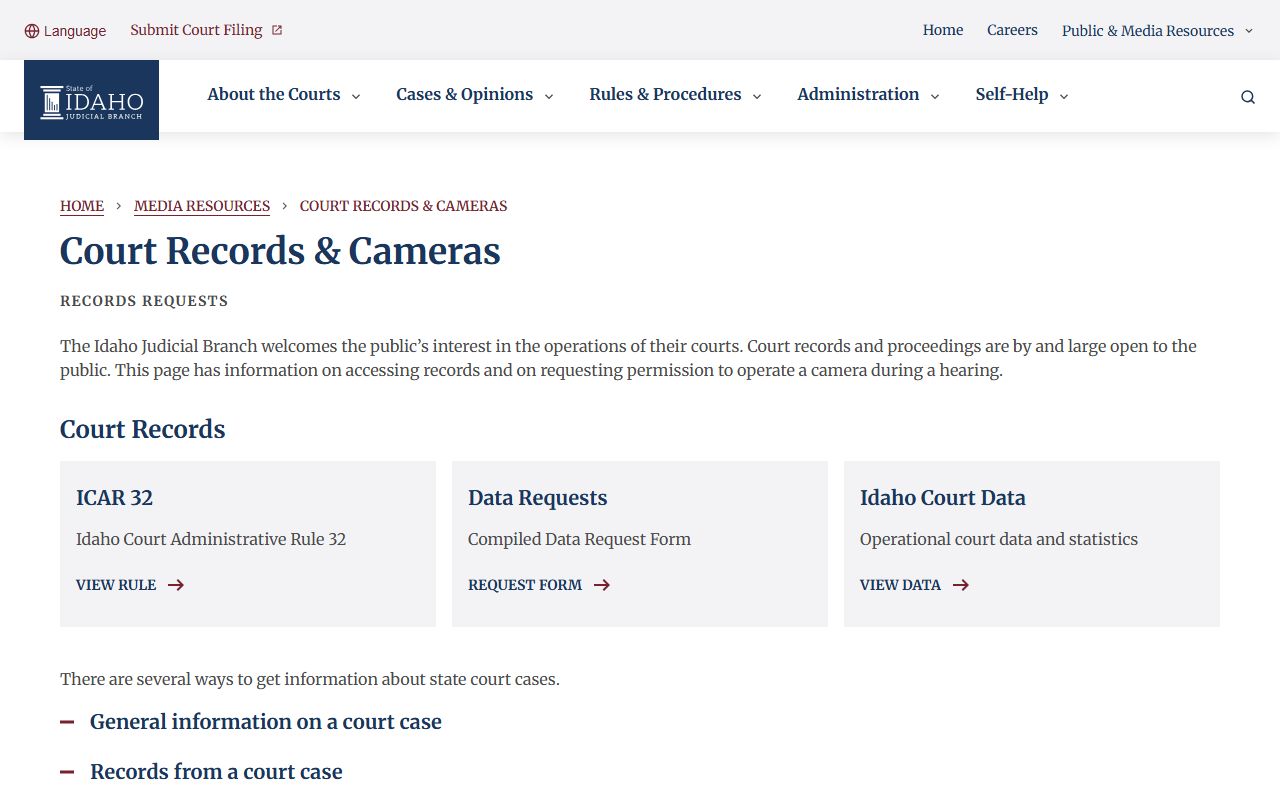
That source is why court records after arrest are routed through the judiciary instead of handled only as ordinary public-records requests.
Court records are governed by Idaho Court Administrative Rule 32, which is separate from ordinary executive-branch public records law. Appellate records, background-check party verification, and compiled court-data requests follow separate Judicial Branch processes.
How to Find Idaho Court Records After Arrest
Search order matters after a jail arrest because the arresting agency, prosecutor, court clerk, and corrections agency do not publish the same record at the same time. Start with iCourt for the public case record, then use the filing county clerk when copies or case documents are needed. Use the jail roster only for custody and booking status.
- Identify the county where the arrest or criminal case was filed.
- Search Idaho iCourt or the alternate official Tyler Odyssey portal URL used by many county pages.
- Compare name, case number, charge text, hearing dates, and filing county.
- For copies, use a courthouse kiosk or request records from the county clerk where the case was filed.
- If the person is still in custody, also check the relevant county jail roster or IDOC search.
| Search field | Use | Limit |
|---|---|---|
| Name | Find a party when no case number is known. | Common names require county and date checks. |
| Case number | Open the most direct case result. | Must match the filing court's format. |
| County | Narrows the case to the filing location. | Arrest county and filing county may differ in unusual cases. |
| Date range | Filters recent filings and hearings. | Booking date and court filing date may not be the same day. |
Idaho Arrest to Court Record Flow
A jail arrest creates custody data first. A court record follows when the prosecutor files a complaint, information, indictment, motion, or other case event. The practical flow is: arrest, booking, first appearance, prosecutor review, filed charge, court docket, hearings, disposition, and then any sentence or correctional placement. The court record is the place to confirm what was actually filed after prosecutor review.
| Stage | Record owner | What to check |
|---|---|---|
| Arrest and booking | County sheriff or local jail | Roster, booking status, bond, hold, booking photo where published. |
| First appearance | Trial court | iCourt, hearing date, judge, case number, custody or bond orders. |
| Prosecutor filing | Prosecutor and court clerk | Complaint, information, indictment, amended charges. |
| Sentence or supervision | Court and IDOC where state custody begins | Judgment, retained jurisdiction, prison, parole, probation, or release. |
Note: A charge listed at booking can differ from the charge that appears later in court records after review.
Idaho Charging Documents After Arrest
Charging documents explain why an Idaho court record after jail arrest is more than an arrest record. The research identifies complaint, information, and indictment as core charging-document terms to explain. They mark the court side of the case and should be checked in the filing county record when the precise charge, count, or amendment matters.
| Document | Plain meaning | Why it matters |
|---|---|---|
| Complaint | A charging document often used early in a criminal case. | It may be the first filed court charge after arrest. |
| Information | A formal prosecutor-filed charging document. | It can replace or refine earlier booking language. |
| Indictment | A formal charge returned through grand-jury process. | It can control felony charge wording in the court case. |
Idaho Charge Status and Outcomes
Charge status is not the same as custody status. A person can be released from jail while charges remain pending. A person can stay in custody because of a hold even if one charge changes. A conviction can lead to IDOC custody, probation, parole, retained jurisdiction, or a local sentence depending on the judgment and sentence.
| Status | Meaning | Where to verify |
|---|---|---|
| Pending | The case is active and not resolved. | iCourt and filing county clerk. |
| Amended | The filed charge or count changed. | Court docket and charging document. |
| Dismissed | A charge or case was ended by court action. | Court order or docket entry. |
| Convicted | A judgment of guilt was entered. | Judgment, disposition, and sentence record. |
| Sentenced | The court imposed a sentence or supervision term. | Court record, IDOC search if state jurisdiction begins. |
Charge vs Conviction in Idaho Court Records
A charge is an accusation or filed count. A conviction is a court outcome. That difference is central for any Idaho court records after jail arrest search because booking charges, filed charges, and final dispositions can all be different. Do not treat a roster charge as proof of conviction.
| Term | What it means | Reader risk |
|---|---|---|
| Booking charge | Initial jail or arresting-agency entry. | May change after prosecutor review. |
| Filed charge | Charge opened in court record. | May be amended, dismissed, or resolved later. |
| Conviction | Court finding or plea resulting in guilt. | Requires a final court disposition, not just an arrest. |
When Court Records and Jail Records Do Not Match
A jail roster may show arresting-agency charges, holds, bail, or booking status before formal charges are filed. iCourt may show the prosecutor-filed charge, amended charge, case events, hearings, or disposition later. IDOC may show sentence or supervision status after conviction, retained jurisdiction, parole, or transfer. These records can be accurate within their own systems while still showing different stages of the same case.
The IDOC Resident/Client Search page shows the correctional-status lookup that may become relevant after sentencing or supervision begins.
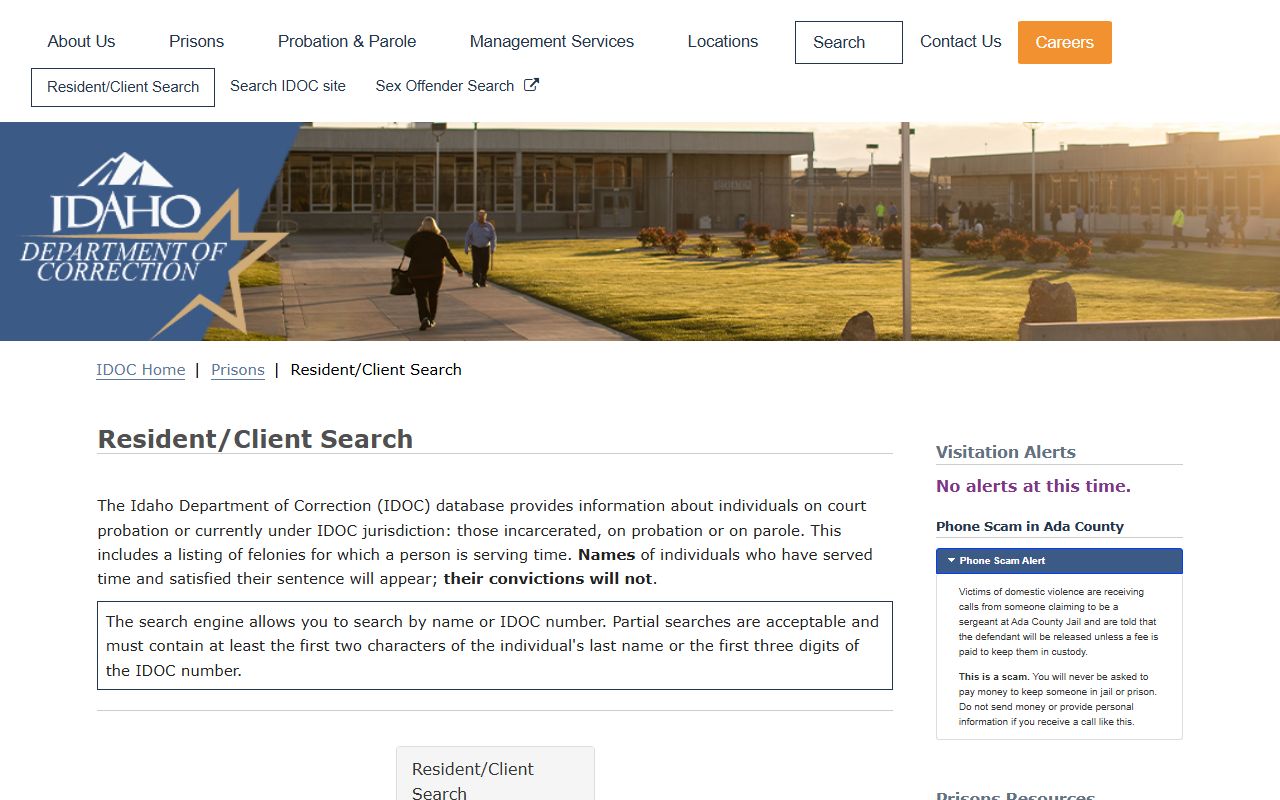
Use IDOC only after the case moves into state correctional jurisdiction; the court case still belongs in iCourt or the filing court.
Sealed, Juvenile, and Restricted Idaho Arrest Records
The statewide research supports caution around juvenile records, sealed records, and active investigative records. Juvenile detention and juvenile correctional facilities appear in the statewide facility directory, but juvenile identities, rosters, mugshots, and case details should not be treated like adult jail records. Court access is governed by ICAR 32, and law-enforcement records may be limited under Idaho Code 74-124 or other law.
The Idaho VINELink portal also supports custody and court-notification registration where a person or case can be registered.
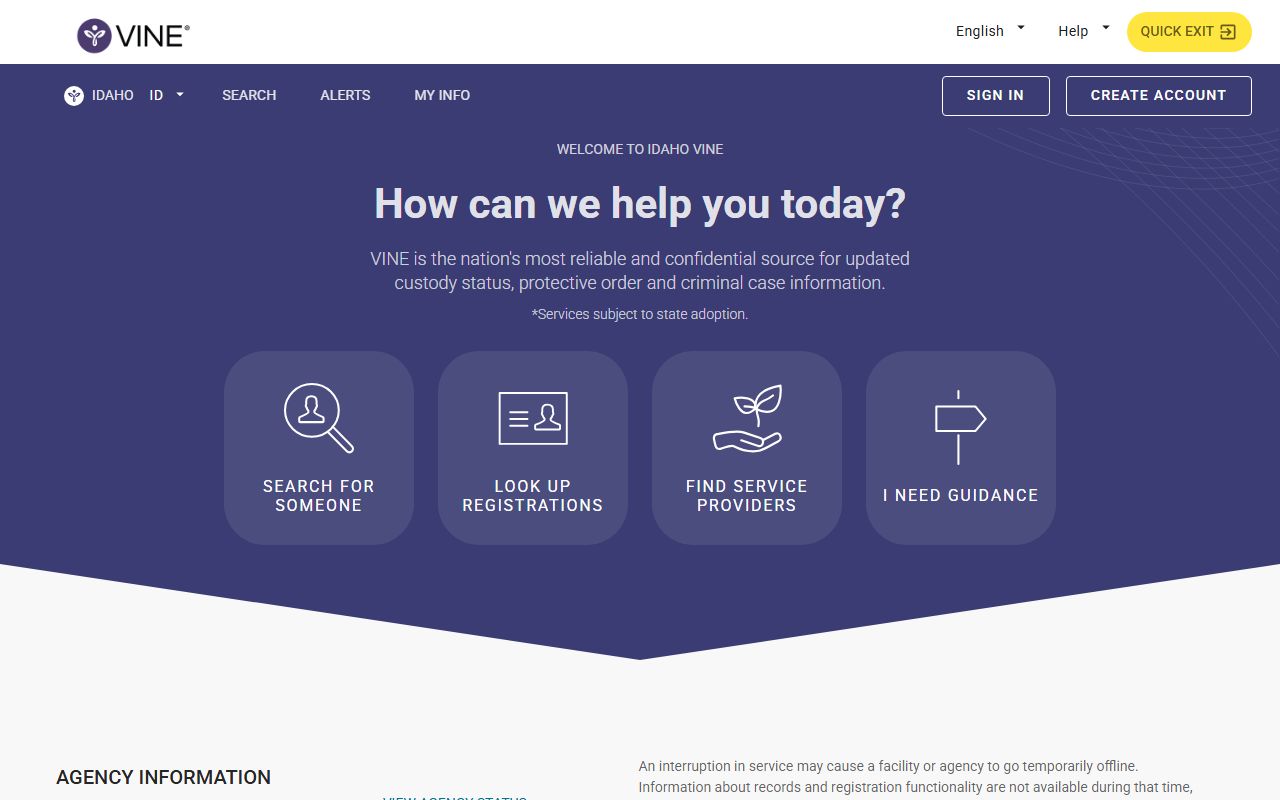
Notifications can help monitor changes, but they do not replace official court access rules or county clerk record requests.
| Record type | Access caution |
|---|---|
| Sealed record | May not appear publicly or may require court authorization. |
| Juvenile record | Do not treat like an adult jail or court record. |
| Active investigative material | May be limited by Idaho Code 74-124. |
| Court case copy | Use ICAR 32, courthouse kiosks, or the filing county clerk. |
Public Record Search
Sponsored Results